
Injection stretch blow moulding (ISBM) machines produce precise, lightweight containers in a single integrated cycle — but the quality of every bottle they form depends on one factor that is easy to overlook: the compressed air supply. Pressure that is too low, flow that is insufficient, or air that is contaminated with oil can all cause production failures that no amount of mould adjustment will fix.
This guide walks through everything a production engineer or plant manager needs to know before specifying or purchasing a compressor for an ISBM line. From pressure requirements at each station, through oil-free versus lubricated machine choices, to a practical sizing method and the five most common pairing mistakes — by the end you will have a clear framework for matching compressor capacity to your actual machine requirements.
How ISBM Machines Use Compressed Air
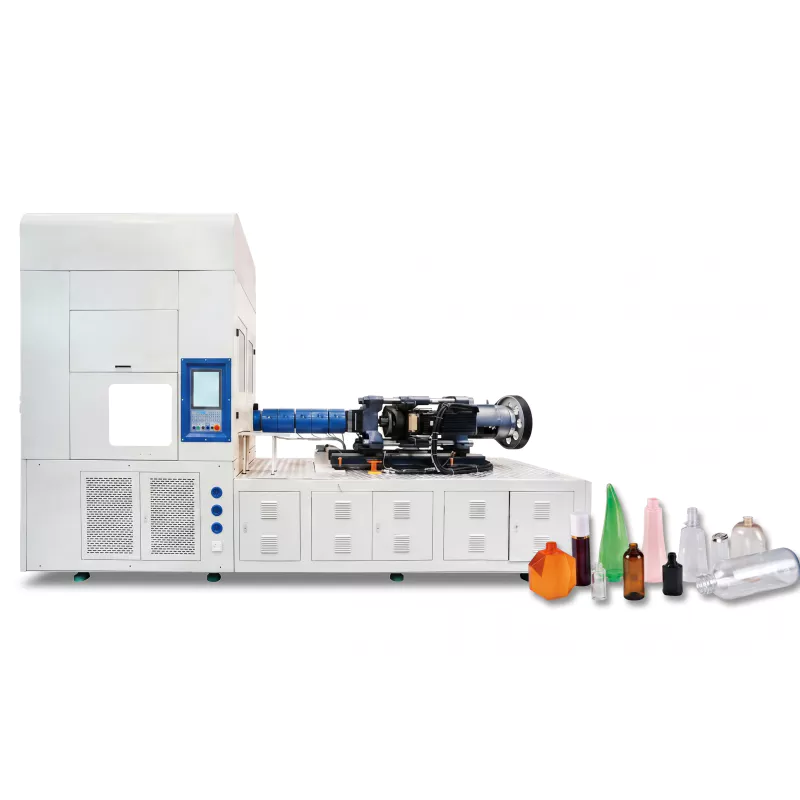
An ISBM machine runs three distinct workstations in a continuous rotary or linear sequence: injection moulding of the preform, conditioning, and stretch-blow forming. Each workstation places a different demand on the compressed air system.
Air Demand at Each Station
| Station | Air Function | Typical Pressure |
|---|---|---|
| Injection station | Mould open/close cylinders, ejector motion | 6 to 8 bar |
| Stretch-blow — pre-blow phase | Initial preform expansion during rod travel | 8 to 12 bar |
| Stretch-blow — high-pressure blow | Full cavity forming, wall crystallisation | 25 to 40 bar |
| Transfer and ejection | Pneumatic gripper, bottle discharge | 6 to 8 bar |
The high-pressure blow phase is the critical stage. The preform wall must be forced against the mould cavity within milliseconds while the stretch rod is still extending. If pressure falls short during this window, the bottle will show uneven wall distribution, reduced clarity, or structural weakness at the base.
For this reason, most ISBM installations run two separate air circuits: a low-pressure ring at 6 to 10 bar for mechanical actuation, and a high-pressure circuit at 30 to 40 bar dedicated entirely to blow forming. Mixing both demands into a single compressor without a booster stage is one of the most common — and most costly — setup errors.
Why ISBM Demands More Than Extrusion Blow Moulding
Extrusion blow moulding (EBM) typically forms bottles at 6 to 10 bar because the parison is softer and the wall is thicker. ISBM works with a precision-injected preform that has already been oriented; the blow pressure must overcome the resistance of a partially crystalline PET or PP wall. This is why ISBM compressor requirements are significantly higher than those for a comparable EBM line of the same output volume.
The Four Parameters You Must Match Correctly
Matching a compressor to an ISBM machine is not a single-number exercise. Four independent parameters must each be sized correctly, because a failure in any one of them will limit production even if the others are adequate.
1. Working Pressure
The compressor rated pressure must exceed the maximum blow pressure at the machine inlet — not at the compressor outlet. Allow for at least 2 to 3 bar of pressure loss through the pipe run, filters, dryers, and any booster valves. If your machine requires 35 bar at the blow valve, the compressor should be rated to at least 38 to 40 bar.
2. Free Air Delivery (FAD)
FAD is the volume of air the compressor delivers, expressed in litres per minute or cubic metres per hour at standard ambient conditions. Each ISBM machine has a rated air consumption figure in its technical specification. Multiply that figure by the number of machines on the line, then add a 20 to 30 percent margin for peak demand during simultaneous blow cycles.
3. Duty Cycle
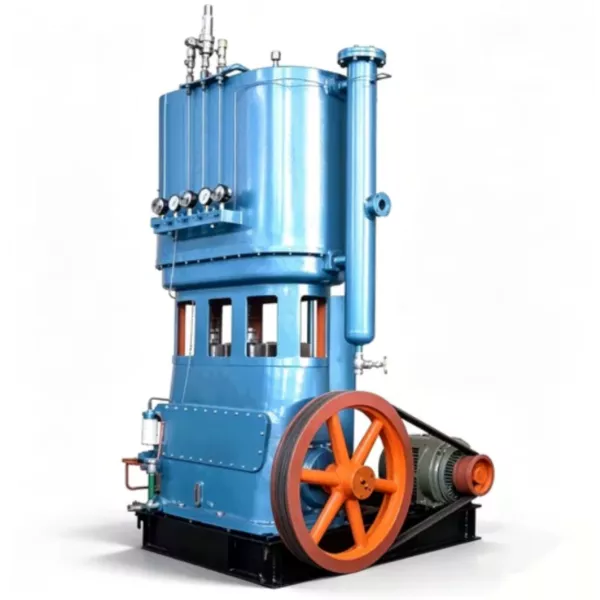
ISBM lines in continuous production run at close to 100 percent duty cycle. A compressor rated for intermittent duty (common in workshop reciprocating machines) will overheat and fail within weeks under this load. Specify a machine with a continuous duty rating — typically a rotary screw or high-pressure piston compressor designed for industrial service.
4. Air Quality Class
ISO 8573-1 defines air purity in terms of particulates, water content, and oil content. For food, beverage, and pharmaceutical containers, the blow air that enters the bottle must meet Class 1 oil content (0.01 mg/m³ or lower). This effectively requires either an oil-free compressor or an oil-lubricated machine with high-specification downstream filtration and continuous monitoring.
Oil-Free vs Oil-Lubricated Compressors for ISBM
The choice between oil-free and oil-lubricated technology is one of the most debated decisions in blow moulding plant design. Here is a clear breakdown of each option.
Oil-Lubricated Compressors
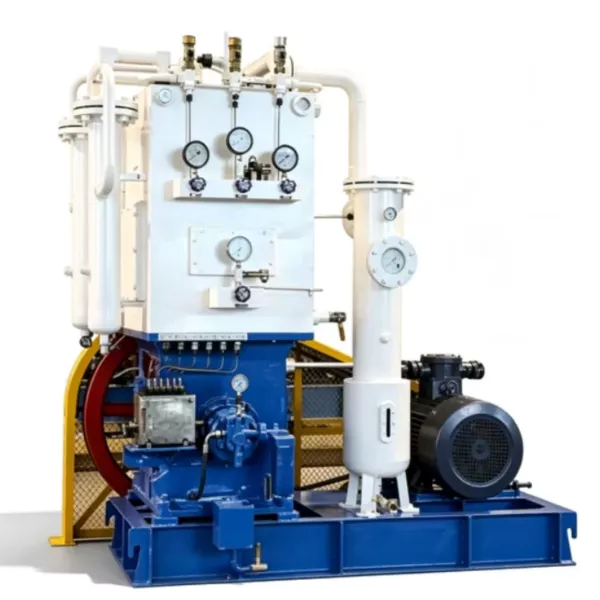
Oil-lubricated high-pressure piston compressors are widely used in PET bottle production because they are robust, cost-effective, and capable of reaching 40 bar with relatively compact units. The risk is carryover: even with coalescing filters and activated carbon stages, trace oil aerosols can pass into the blow circuit. In food and beverage applications, this creates compliance exposure under FDA 21 CFR, EU Regulation 10/2011, and similar frameworks.
If you run an oil-lubricated machine, the minimum downstream treatment should include a coalescing filter to 0.01 mg/m³, an activated carbon adsorber, and a differential pressure indicator on each filter stage. Filters must be serviced on schedule — a blocked filter element causes a pressure loss that is often mistakenly diagnosed as a compressor fault.
Oil-Free Compressors
Oil-free machines — whether reciprocating or rotary screw — eliminate the contamination risk at source. They are the preferred choice for:
- Pharmaceutical bottles and vials
- Cosmetic and personal care packaging
- Baby food and infant formula containers
- Any application requiring BPA-free or food-contact certification
The trade-off is capital cost: oil-free high-pressure units typically cost 30 to 50 percent more than equivalent lubricated machines. However, when the total cost of filtration consumables, compliance audits, and potential product recall risk is factored in, oil-free machines often show a lower total cost of ownership over a five-year horizon.
| Factor | Oil-Lubricated | Oil-Free |
|---|---|---|
| Purchase cost | Lower | Higher |
| Contamination risk | Present without filtration | Negligible |
| Food/pharma compliance | Requires downstream treatment | Straightforward |
| Maintenance complexity | Oil changes, filter replacement | Lower consumable cost |
| Noise level | Moderate to high | Varies by type |
How to Size Your Compressor: A Practical Method
The following four-step method gives a reliable starting point for most ISBM installations. Always verify against the machine manufacturer specification sheet for your exact model.
Step 1 — Find the machine air consumption figure
Locate the “air consumption” or “compressed air demand” value in the ISBM machine technical datasheet. This figure is usually given in Nm³/h or L/min at a stated pressure. As an example, a mid-range 4-cavity ISBM machine typically consumes 180 to 280 Nm³/h of high-pressure blow air at 35 bar during continuous production.
Step 2 — Apply a simultaneity factor
If you are running multiple machines from a central compressor station, not all machines will reach peak blow demand at exactly the same moment. A simultaneity factor of 0.85 to 0.95 is typically applied for lines with two to four machines. For a single machine, use 1.0.
Step 3 — Add a capacity margin
Specify a compressor with at least 20 to 25 percent capacity above the calculated demand. This margin covers peak simultaneous demand spikes, compressor performance degradation over time, and future expansion of the line.
Step 4 — Size the receiver tank
A properly sized receiver tank smooths out pressure fluctuations caused by the cyclic nature of ISBM blow demand. The general guideline is a receiver volume of 6 to 10 litres per Nm³/h of compressor FAD for high-pressure systems. Undersizing the receiver is a frequent cause of pressure dips that operators mistakenly attribute to the compressor itself.
Example Calculation
Two EP-ZQ80 machines, each rated at 220 Nm³/h at 35 bar.
Total demand: 440 Nm³/h
Simultaneity factor (0.90): 396 Nm³/h
With 25% margin: 495 Nm³/h required FAD
Receiver tank: 495 x 8 = 3,960 litres minimum (two 2,000-litre tanks in parallel is a common practical solution)
Five Common Mistakes When Pairing Compressors with ISBM Machines
Mistake 1: Pressure adequate, flow insufficient
The compressor reaches 35 bar, but FAD is undersized. The blow cycle consumes stored air faster than the compressor replenishes it, causing progressive pressure loss across a production shift. Wall thickness becomes uneven and reject rates climb through the day.
Mistake 2: Using a low-pressure machine for the blow circuit
A standard workshop air compressor rated at 8 to 10 bar cannot serve the high-pressure blow station. Some operators attempt this with a booster, but if the booster is undersized the result is the same pressure deficit as Mistake 1, with added maintenance complexity.
Mistake 3: Ignoring pipe pressure loss
A 40 bar compressor 80 metres from the machine, connected via undersized pipe, may deliver only 35 bar at the machine inlet. Pressure loss increases with pipe length, reduced diameter, and the number of fittings. Size the distribution pipe for velocity below 6 m/s at maximum flow.
Mistake 4: No receiver tank or undersized tank
Without adequate storage volume, the compressor cycles on load and off load in response to every blow event. This causes pressure oscillation at the machine, increases compressor wear, and makes process control more difficult. The receiver tank is not optional — it is part of the system.
Mistake 5: Oil-contaminated air reaching the bottle cavity
Oil aerosol in the blow air leaves a film on the interior bottle wall. In clear PET bottles this appears as a faint haze. In food or pharmaceutical containers it is a regulatory non-conformance. Overdue filter elements are the most common cause — establish a filter service schedule and stick to it.
Recommended Compressor Configurations by Production Scale
| Production Scale | Typical Machine | Recommended Compressor Setup |
|---|---|---|
| Small / pilot line | EP-ZQ40 or ZQ60, 1 machine | Oil-free high-pressure piston compressor, 30 to 40 bar, 150 to 250 Nm³/h FAD, 500-litre receiver |
| Medium production line | EP-ZQ80 or ZQ100, 1 to 2 machines | High-pressure rotary screw or multi-stage piston, 35 to 40 bar, 400 to 600 Nm³/h FAD, dual 1,000-litre receivers |
| Large / multi-machine plant | EP-ZQ135, 3 or more machines | Centralised compressor station, redundant units (N+1), variable speed drives for load matching, staged receiver banks, full ISO 8573-1 Class 1 filtration train |
For all scales, a refrigerant dryer is strongly recommended to reduce dew point to 3°C or below. In humid climates or poorly ventilated compressor rooms, moisture in the blow circuit causes internal bottle condensation, which affects label adhesion and can promote microbial growth in food packaging.
Frequently Asked Questions
Can I use my existing factory compressor for my ISBM machine?
Possibly, but only if it meets all four parameters: rated pressure above 35 bar, sufficient FAD for the ISBM air consumption plus margin, continuous duty rating, and air quality suitable for your container application. Most general factory compressors run at 8 to 10 bar and are not suitable for the high-pressure blow circuit without a booster stage. Have your compressor specification sheet reviewed against the ISBM machine datasheet before committing to the setup.
What happens if air pressure falls during production?
The immediate effect is incomplete blow forming. The preform may not reach the mould wall in the available blow time, producing a bottle with thick base, thin shoulders, or reduced clarity. If pressure loss is gradual, operators may not notice until the reject rate rises. If pressure loss is sudden, the machine safety circuit will typically trigger an alarm and pause production. Either way, the root cause — whether compressor fault, blocked filter, or receiver undersizing — must be traced and resolved before resuming.
Do I need a separate air dryer in addition to the compressor?
Yes, in virtually all production environments. The compressor aftercooler removes bulk moisture, but the compressed air leaving the aftercooler is still saturated at its current temperature. As the air cools further in the distribution pipe, moisture condenses and carries forward to the machine. A refrigerant dryer sized to the compressor FAD and set to 3°C pressure dew point will eliminate this problem. In very cold climates or high-altitude installations, a desiccant dryer may be preferable for a lower dew point.
How often should the compressor be serviced on an ISBM line?
Follow the manufacturer service intervals as a minimum, but plan for more frequent filter checks in dusty or humid environments. For a continuously running ISBM plant, a practical schedule is: weekly visual checks on filter differential pressure indicators, monthly drain valve and moisture separator checks, and full service at the hours interval stated in the compressor manual — typically 2,000 to 4,000 hours depending on the machine type. Keep a service log; this documentation is also relevant if the plant undergoes food safety or pharmaceutical GMP audit.
What certifications should I look for in a compressor for food-grade blow moulding?
For food contact packaging, the air quality standard most commonly referenced is ISO 8573-1 Class 1 for oil content. Compressor certifications to look for include ISO 9001 for the manufacturing quality system, CE marking for the European market, and any regional approvals relevant to your export market. If the compressor is oil-free, ask the manufacturer to provide test data for oil carryover at rated operating temperature, since performance can vary with ambient conditions.
—
Conclusion
Pairing the right air compressor with an ISBM machine comes down to three fundamentals: pressure that reaches the blow station at the level the process requires, flow that keeps pace with continuous production demand, and air quality that suits the end-use requirements of the container. Get all three right and the compressor becomes an invisible, reliable part of the line. Get any one of them wrong and it becomes the production bottleneck.
The EP-ZQ and EP-HGY series ISBM machines are designed for high-output continuous production. Each model comes with a full compressed air specification in the technical datasheet, making the sizing process straightforward when the four parameters above are applied systematically.
Need help specifying the right compressor for your ISBM line?
Our engineering team can review your production requirements — machine model, cavity count, annual output target, and container application — and provide a matched compressor specification alongside the machine quotation.