
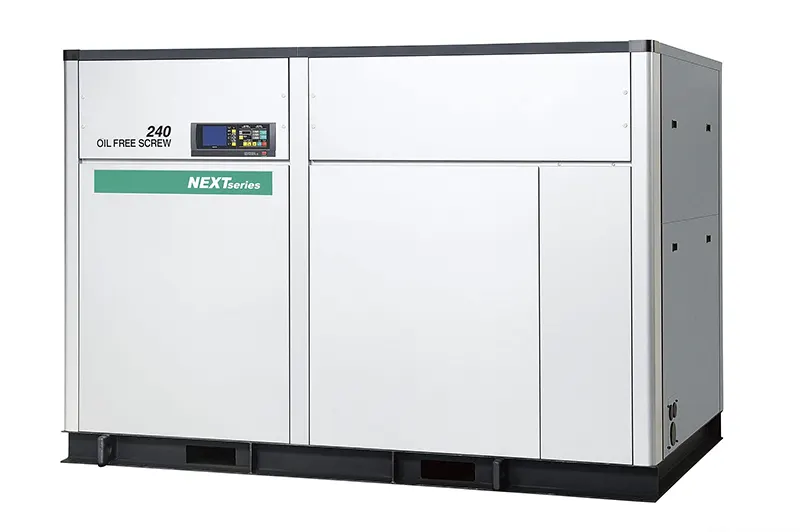
In industrial production, oil-free air compressors have gradually become the preferred equipment for many companies due to their advantages of environmental protection, pollution-free, and clean air sources. It can not only provide stable air source power for production, but also avoid secondary pollution of the air source by oil, and meet strict production standards. However, like any precision equipment, oil-free air compressors may also encounter various faults during use.
Startup difficulties
When the oil-free air compressor cannot start, first check the power supply system. Unstable power supply voltage is one of the common reasons. Make sure that the power supply voltage matches the marking on the air compressor nameplate. At the same time, carefully check the power supply line to see if there are problems such as poor contact and circuit breakage. If problems are found, repair or replace the faulty line in time.
As the power core of the air compressor, the motor’s failure can also cause failure to start. Short circuit of the motor winding and damage to the motor bearing may affect the normal operation of the motor. When a motor failure is suspected, a preliminary judgment can be made by listening to the sound of the motor when it is running, smelling whether there is an odor, and touching whether it is abnormally hot. Once a problem is found, the machine should be shut down immediately and a professional technician should be contacted for repair or replacement of the motor.
The triggering of the overload protection device may also prevent the air compressor from starting. When the load exceeds the rated value of the air compressor, the overload protection device will automatically shut down to protect the equipment. At this time, it is necessary to check the load. If the load is too large, you should consider reducing the load or adding additional oil-free air compressors to share the load.
Insufficient pressure
Leakage in the air system is a common factor leading to insufficient pressure. Carefully check all the connection parts of the air system, including pipes, joints, valves, etc., to see if there is any leakage. Once a leak is found, it should be repaired in time. Damage to the air valve will also affect the pressure. If there is a problem with the air valve, it needs to be replaced in time.
Blockage of the filter element will also limit the inflow of air, resulting in a decrease in gas production. Regular cleaning or replacement of the filter element to ensure smooth air flow is an important measure to maintain stable pressure. In addition, problems with the air intake pipe should not be ignored. If there is leakage, damage or bending, it will affect the normal entry of air and cause the air compressor to fail to inflate. Check the air intake duct, repair or replace the damaged part in time, and ensure that the duct connection is tight and without bends.
Excessive temperature
The cooling system is essential for the normal operation of the oil-free air compressor. Check the cooling system to see if the fan, radiator and other components are damaged or blocked. If the fan does not rotate, it may be a circuit failure or the fan itself is damaged, and corresponding repair or replacement is required; if the radiator is blocked, a high-pressure air gun can be used to clean the dust on the heat sink to improve the heat dissipation efficiency.
Overload operation will cause the equipment to generate too much heat, resulting in excessive temperature. Make sure that the equipment operates under the rated load to avoid damage to the equipment due to overload. At the same time, a good ventilation environment helps the equipment to dissipate heat, and the air compressor should be placed in a well-ventilated and dry location.

Excessive noise
Damage to the bearing will produce abnormal noise. When you hear excessive noise when the air compressor is running, you should check the bearing condition. If the bearing is found to be damaged, it needs to be replaced in time. Loose fasteners may also cause noise. Regularly check and tighten each fastener to reduce the noise caused by looseness.
Abnormal vibration and blockage of the air system are also one of the sources of noise. Check the air circuit system to see if there are any loose or blocked parts. If the air circuit is found to be blocked, it should be cleaned in time to ensure smooth air circulation.
Comprehensive failures
When the air compressor has a comprehensive failure, the troubleshooting process needs to be more systematic and meticulous. For example, when the compressor does not supply air, check whether the control cylinder is moving, check whether the butterfly valve has mechanical failures, and check the sub-circuit where the solenoid valve is located one by one.
When the compressor cannot start, first check whether there is control voltage. If not, check whether the fuse is intact; also check whether the control relay and time relay are operating normally. The compressor is running normally but it is difficult to start after shutdown. It may be caused by the wrong brand of lubricating oil used, oil coking or serious leakage of the shaft seal. At this time, the equipment should be cleaned and the oil should be changed thoroughly. If the shaft seal is leaking, it needs to be removed and replaced; also check whether the original position of the unloading valve disc has changed. If there is a change, the position needs to be readjusted.
Maintenance
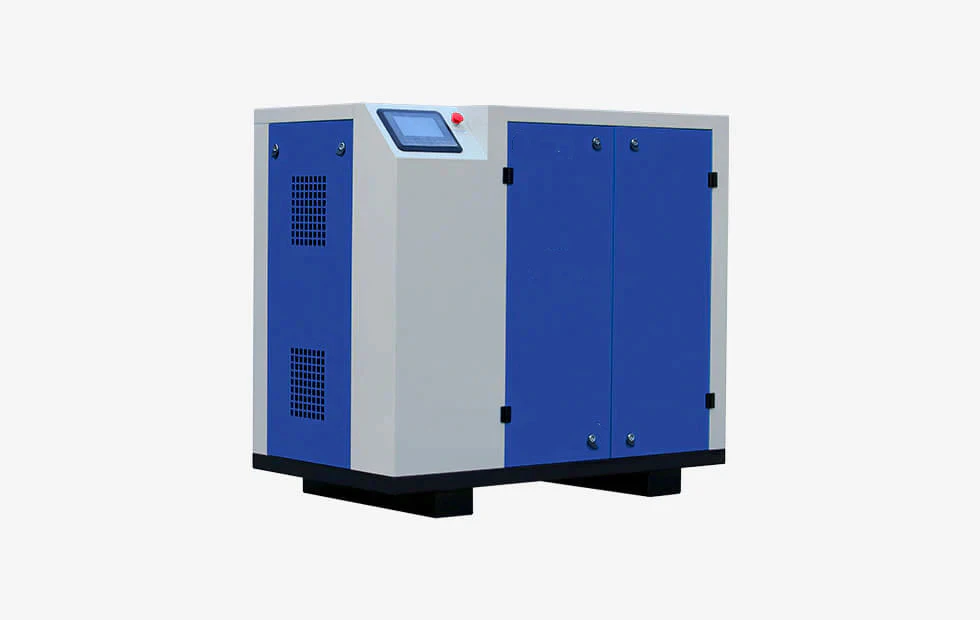
Regular maintenance is an important guarantee for the stable operation of oil-free air compressors. Regularly check the status of the filter element, pipes and valves, and clear the obstructions in time to ensure the normal operation of the equipment. Proper lubrication and cleaning can extend the life of the equipment and improve its efficiency.
Adjust the appropriate operating pressure according to actual production needs. Excessive operating pressure will not only increase energy consumption, but also damage the equipment; while too low pressure may cause insufficient airflow. Reasonable setting of working parameters can effectively improve the working efficiency of the equipment.
With the development of Internet of Things technology, many modern oil-free air compressors are equipped with intelligent monitoring systems. These systems can monitor the operating status, energy consumption and maintenance needs of the equipment in real time. Through data analysis, enterprises can discover potential problems and take timely measures, while understanding the efficiency of equipment use and optimizing production processes.

Professional support
When encountering complex faults or problems that cannot be solved by themselves, it is wise to seek help from professional maintenance personnel. The stable operation of oil-free air compressors is crucial to the production of enterprises. By mastering the above troubleshooting and quick repair methods and strengthening the maintenance of equipment, enterprises can effectively improve the efficiency of oil-free air compressors, reduce the frequency of failures, reduce operating costs, and enhance market competitiveness. I hope this guide can help you better deal with various problems of oil-free air compressors and make your production smoother and more efficient.